
January
A shop still holding last year.
That year is not finished.
Estimates can still be named.
CPA alternative, Austin
Four taps. Expert means a month with a fee beside it.
A fee only after the months are named.
Steven Palmieri is a Tax CFO, not a CPA firm. A Tax CFO closes the Austin month, sets payday up on your provider, and writes a price that lists those jobs separately. The free call says whether the scope is real.
You would speak with the CPA alternative: a Tax CFO, not a CPA firm. If a contract truly needs a signed audit or review, the call will tell you who signs it.
We keep the books and set payday up on the provider you already run. Steven Palmieri, Tax CFO and the Entrepreneur's CFO, prepares the return once the bank and the books agree.

You will be talking to the Steven Palmieri practice.
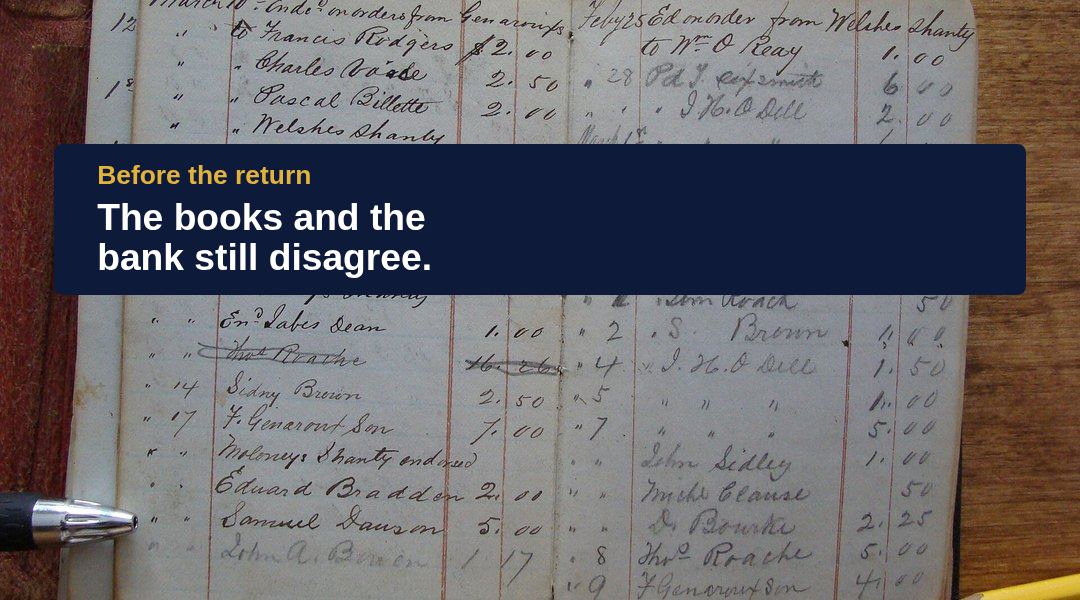
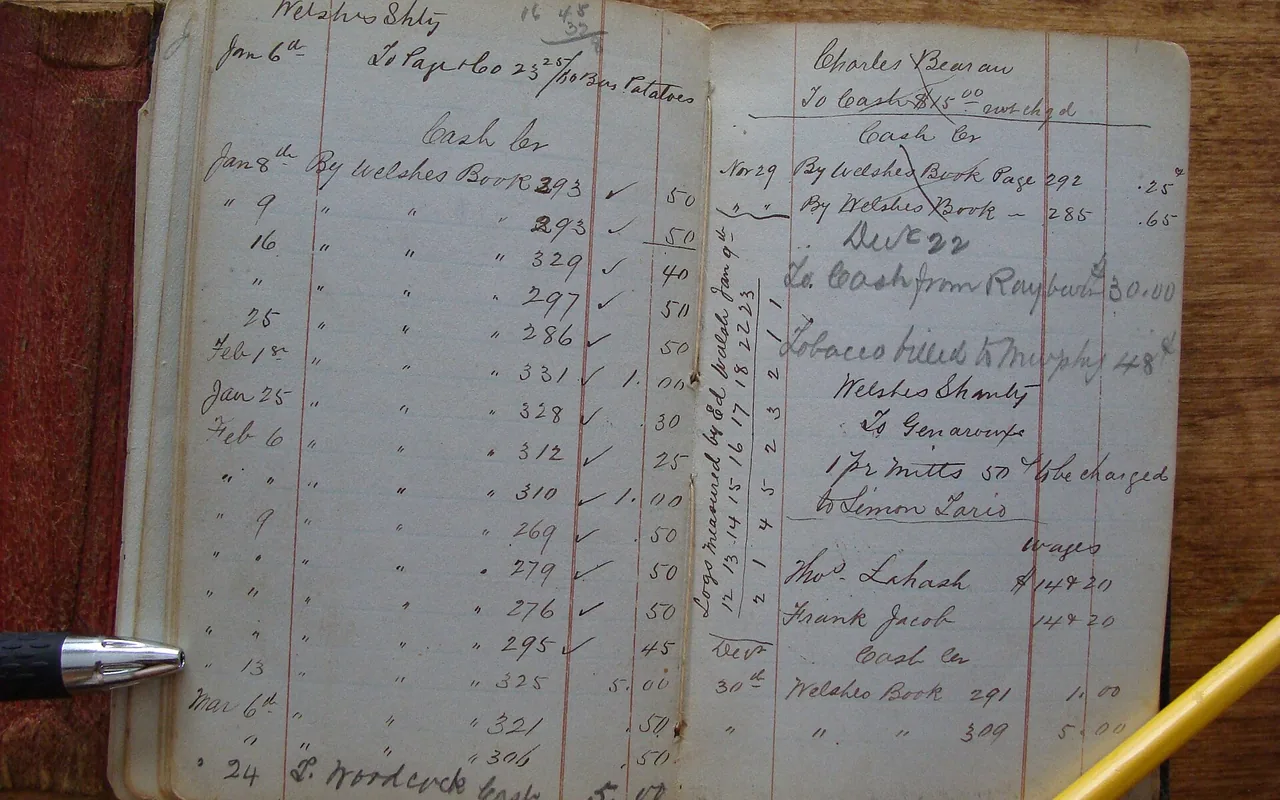
You can point at the statement and the ledger and see one number. That hour is the close.
Click to see the close ›Tap to see the close ›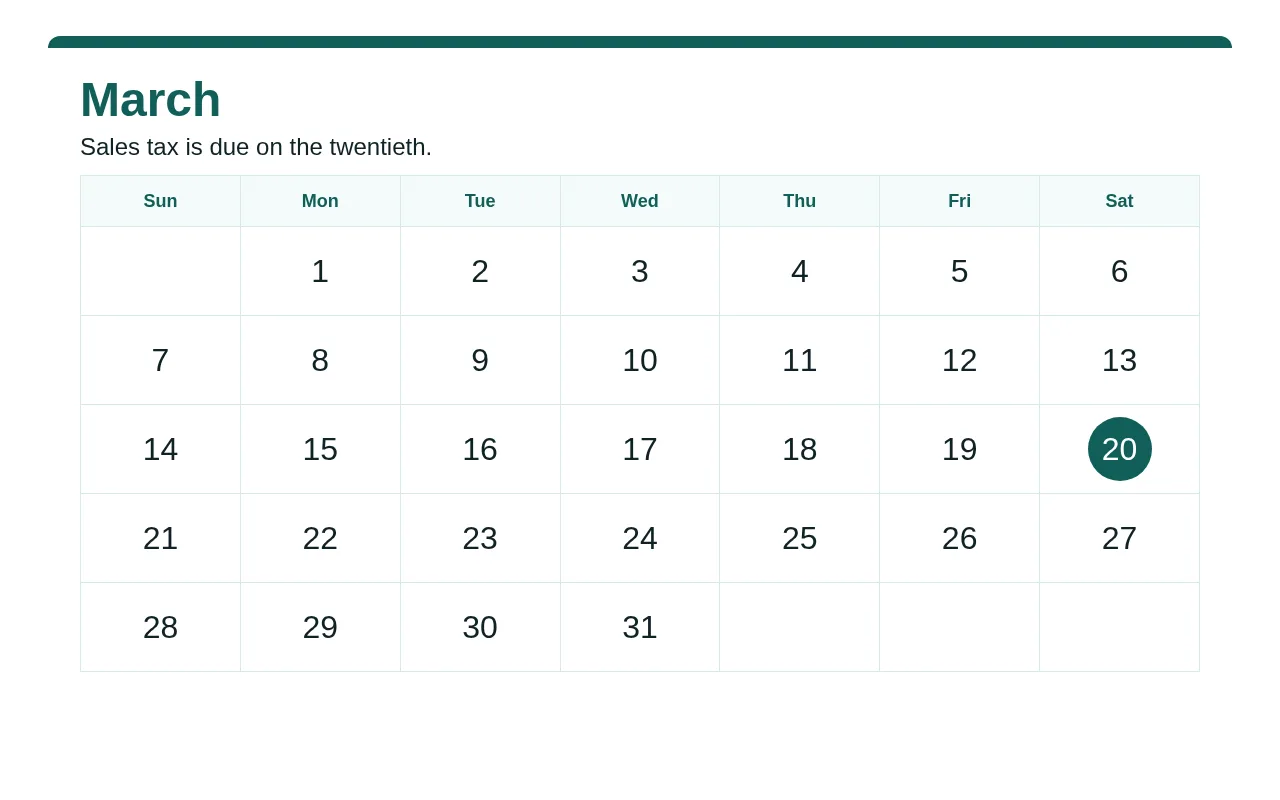
Sales tax on the twentieth comes out of a closed month, not a guess from the register.
Click to read the dates ›Tap to read the dates ›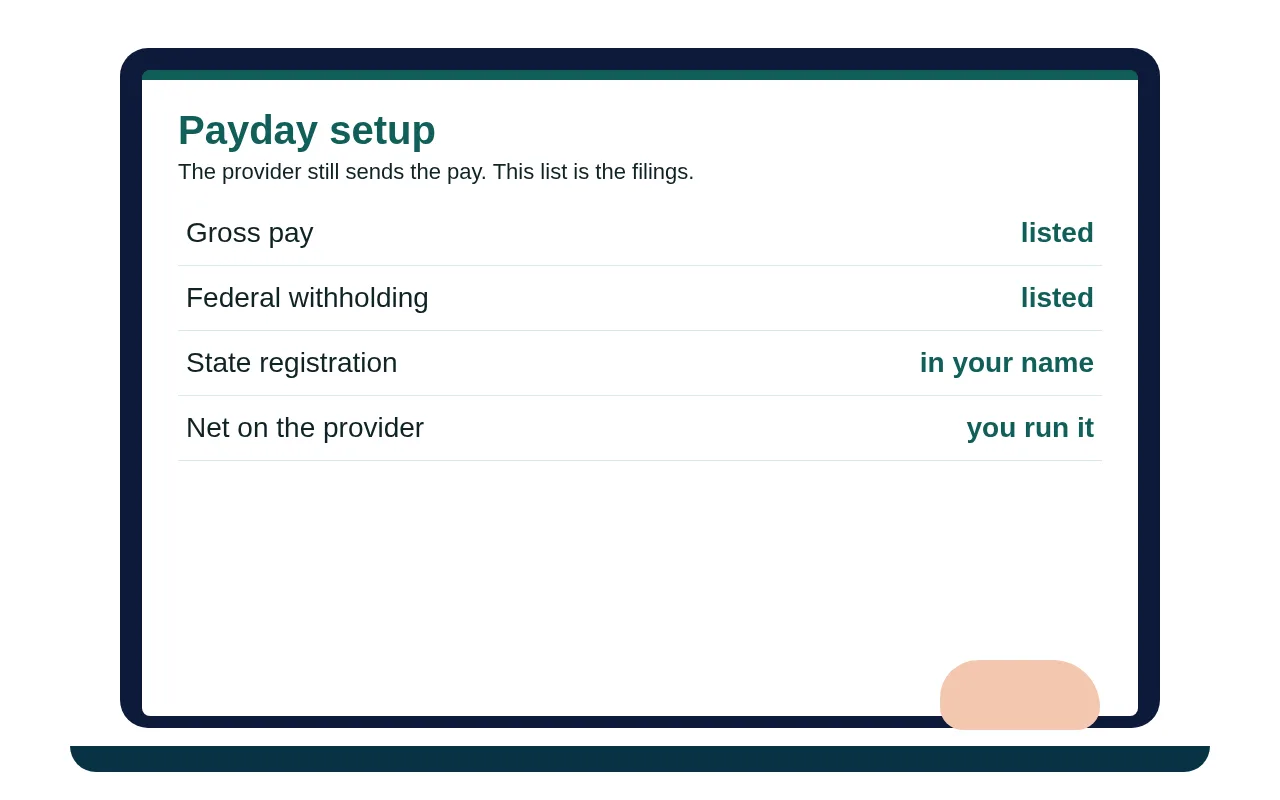
Payday stays on your provider and in your name while we set the filings up.
Click to see payday setup ›Tap to see payday setup ›
We put that same patience into last year's return before this year's advice.
Click to read last year ›Tap to read last year ›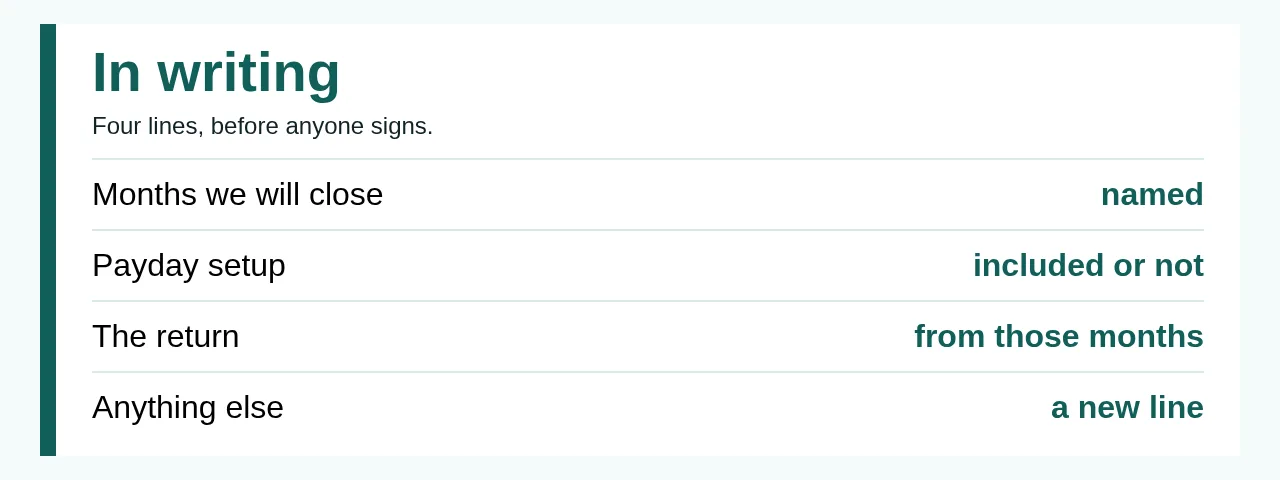
The paper names the months we will close, whether payroll setup is included, and that the return is built from those months.
Click to see the price ›Tap to see the price ›Ask while the month is still open. That is when the answer can still change something.
Click to ask a question ›Tap to ask a question ›
The practice is based in Dallas. Owners in Austin meet us by video.
Name the last finished month.
Name, phone, and one line about the year are enough to start.
You will be talking to the Steven Palmieri practice.
A feed from the bank can suggest a match. A person on this practice still has to agree with it. When a line does not match, it gets a name and a next step, and it does not get buried under a new month.
The month locks when the bank, the cards, and the loans tell the same story as the books. Reports come after that lock. A report printed on an open month is a guess with nicer type.
We do this the same way for an owner in Austin as we do for an owner anywhere else in Texas. A shared file and a date on the calendar carry the month. The tie is the same job, and a finished date does not slide just because the owner works in Austin. The lock is the point of that hour.
Pay still goes out from whoever already runs payday. Our part is the registration list, a note about which return that company files, and a monthly file that points at them on purpose.
A change of payroll company is a fresh setup, written down before it begins. Answering the phone does not turn us into that company. Pay still leaves from their system.
Payday setup is the quiet part. Your provider still sends the pay, and we only write who files what.
Think of the return as a recap of months that have already locked. An open March stays open on the return too. We would rather move the conversation than file a draft that has to be retold.
Last year's filing still sits in the room. Elections, estimates, and the payroll treatment are in that PDF. We open it before this year's plan gets any airtime. That PDF is a record, never a forecast of a refund or a balance.
April piles paper on a lot of owners. The worry is real. Finished months still come first, and the return comes after them.
Sales tax for a shop in this city belongs on the twentieth, tied to the month that earned it. The Comptroller locator, read beside the city page, shows a combined rate of 8.25 percent. The state keeps 6.25 percent. The city and Capital Metro each keep 1 percent.
May can still bring a franchise report when the year sits under the Comptroller's no tax due threshold of two million six hundred fifty thousand dollars. Filing that short sheet is ordinary May work on this practice. The rate and the threshold are the ones the Comptroller publishes.
By the twentieth, taxable sales should already sit in a closed month.
A lender who wants the figures signed is pointed, during the opening conversation, toward a firm the Texas rule lets sign. We do not take that signature job.
An audit, a review, or a compilation cover is the same kind of request. What can stay is the return, a talk about a management choice, and statements that do not wear a cover. The full boundary lives on the limits page.
We will not dress a monthly file up as a signed examination. If that is the only thing a bank will accept, we help you point the request at a firm that can sign it, and we keep the monthly file here if you still want it.
Some years arrive already late. The work is still the same shape. Find the last month that ties, name the gap, and close forward. A penalty or a notice is a fact to read, not a reason to invent a result.
We will not call the year cheap, fast, or painless. You get a plain account of what the file shows and what a written scope would cover. When the true reply is that you can wait, we give you that reply.
Ask while an open month can still change. After the year is filed, the same question only retells it.